
GRC Domes & Shikhars
A GRC dome is not one casting. It is a set of ring segments and cap pieces, each sized for the mold shop, the truck and the crane, that closes into a continuous profile on site. MIRU manufactures GRC domes and shikhars this way at its factory in Kota, Rajasthan — from your issued drawings, not a catalogue of stock profiles.
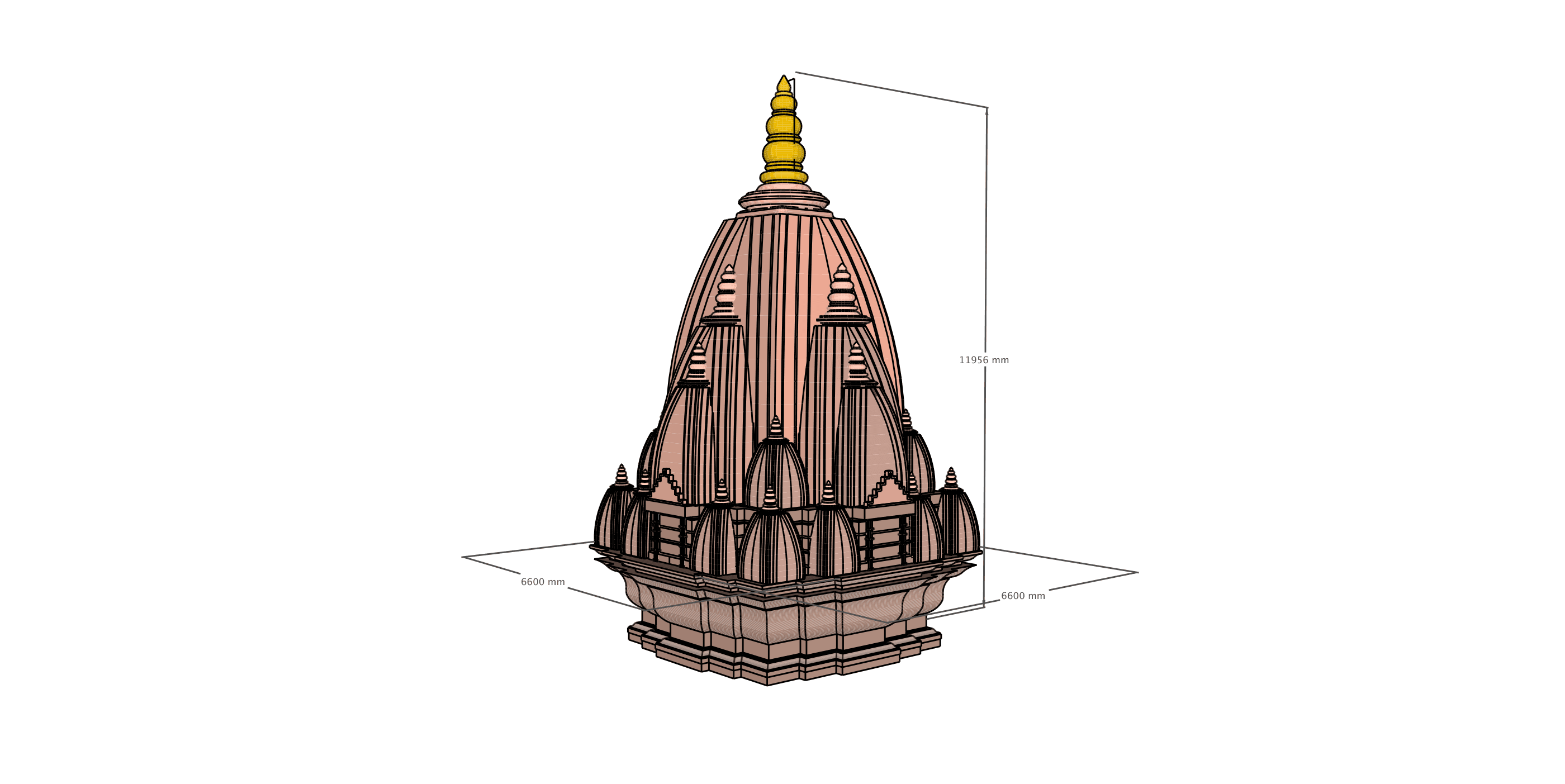
Every dome we take on is rebuilt as an exact 3D model before mold work begins. Double-curved geometry, stepped shikhar tiers, kalash details — all resolved digitally, then broken into element families with their own engineered molds, CNC-machined where the profile demands it.
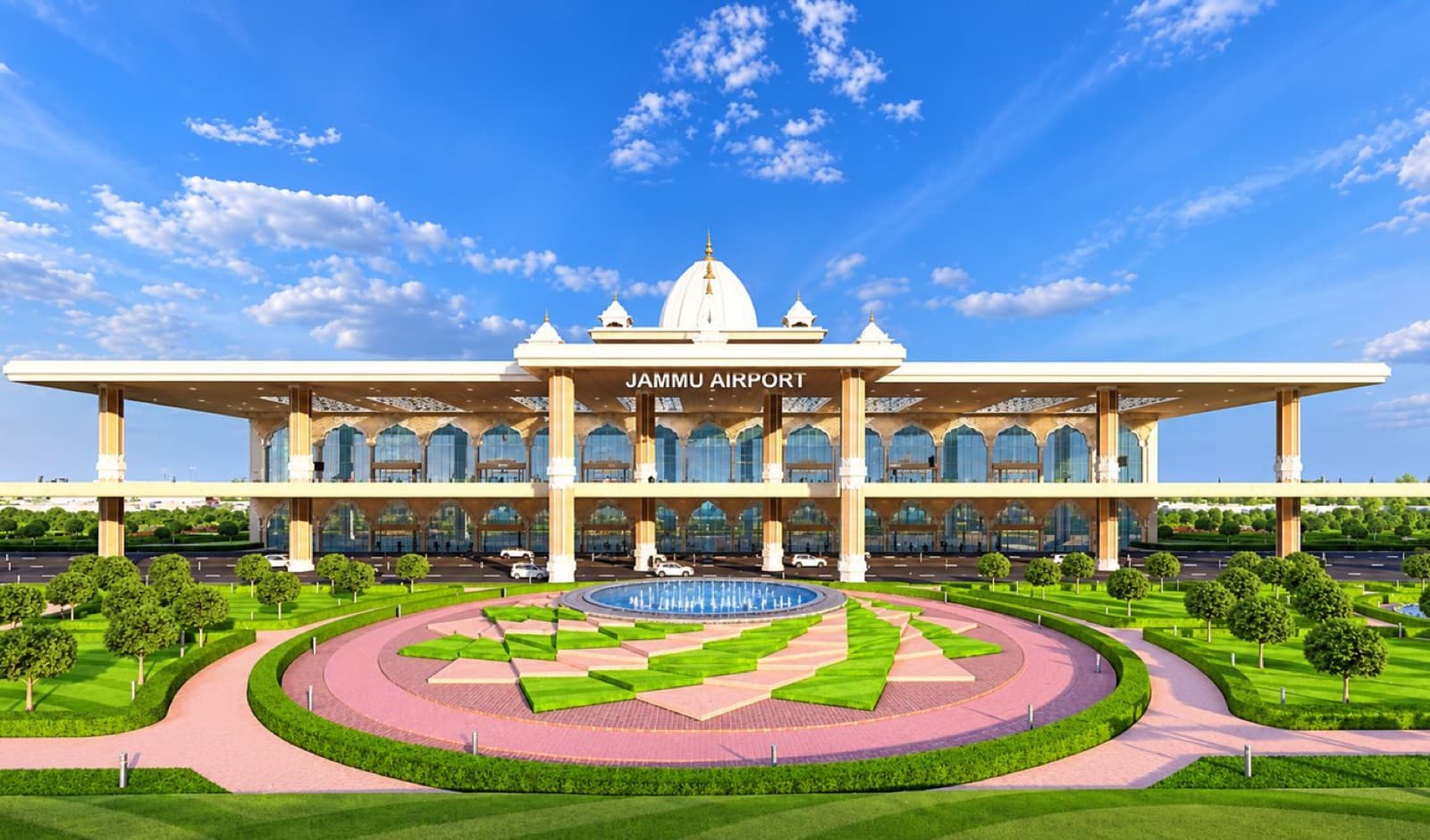
The same pipeline is running now on the Jammu Airport terminal roofline and the centre dome at Mirzapur University — both supplied as tracked, itemised lots with installer drawings.
What we deliver
Segmented dome shells
The shell resolved into ring segments and cap pieces sized for casting and transport, closing to a continuous double-curved profile on site with joints placed where the geometry absorbs them.
GRC shikhar assemblies
Stepped tiers, cornice bands and kalash caps cast as separate element families that stack true on site because every piece comes from one 3D model, not separate patterns.
Temple dome GRC profiles
Ribbed shells, lotus bands, pinnacles and finials with the ornament carried in the mold face rather than applied after casting — identical across every repeat segment.
Exact 3D of double-curved geometry
Your DWG or GFC set rebuilt as a full digital model before any mold work; every segment, joint line and fixing position exists in the model first and is approved before casting.
In-house engineered molds
A mold set per element family, CNC-machined where the profile is ornamental, perforated or tight, so repeat segments come out of the shop identical across the run.
No-polymer GFRC, tested per batch
Spray-up casting with AR-glass fibre from Nippon Electric Glass and Owens Corning; flexural tests to ASTM C947 in our own lab, with acceptance at MOR 12 N/mm² and LOP 6 N/mm².
GFRC dome manufacturing, logged end to end
Every casting session, mix batch, QC check and dispatch challan sits in one digital production record — 1,230+ mix batches logged across live work.
Sequenced dispatch with installer drawings
Segments leave Kota in tracked, itemised lots, ring by ring in erection order, with drawings marking joints, fixing points and setting-out sequence.
From your drawings to installed elements
Your DWG or GFC set comes in; an exact 3D model of the dome goes back for approval. Segmentation happens in the model: the shell is resolved into ring segments and cap pieces sized for casting, transport and crane handling, with joints falling where the profile can absorb them. Each segment family then gets its own engineered mold — CNC-machined where the geometry is tight or ornamental, as it usually is on shikhar tiers and kalash bases.
Casting is no-polymer spray-up GFRC with AR-glass fibre from Nippon Electric Glass and Owens Corning. The in-house lab runs flexural tests to ASTM C947 against acceptance targets of MOR 12 N/mm² and LOP 6 N/mm². Every casting session, mix batch and QC check is logged, and segments dispatch in tracked lots — ring by ring, in the order the site will fix them — with installer drawings.
Built at MIRU
The factory, measured.
from our production system, July 2026Questions
How is a GRC dome fixed to the supporting structure?
Each segment is detailed for mechanical fixing back to the supporting structure — ring beam, steel frame or RCC shell — with fixing positions resolved in the 3D model against your issued structural drawings. Segments dispatch with installer drawings showing sequence, fixing points and joint lines, so the site closes the dome ring by ring without setting-out guesswork.
Why use GRC rather than RCC or masonry for domes and shikhars?
Weight and ornament. GRC shells cast thin relative to precast or in-situ RCC, so the dome puts less load on the structure and needs lighter framing at height. Ornament — ribs, tiers, kalash profiles — is carried in the mold, not built up by hand on scaffolding. And because segments come from engineered molds, every repeat is identical, which site-built masonry and plaster cannot hold across a full roofline.
How should domes and shikhars be specified in tender documents?
Specify glass fibre reinforced concrete tested to ASTM C947, with acceptance values for MOR and LOP — we test in-house against MOR 12 N/mm² and LOP 6 N/mm². Issue your GFC or DWG set; we rebuild it as an exact 3D model and return segmentation and shop drawings for approval before mold work begins. Molds are machined from the approved model, not interpreted from the 2D set.
What finish options are available?
The finish comes off the mold face. Smooth surfaces, stone-type textures and fine ornamental relief are all carried in the mold rather than applied afterwards, and pigment goes into the mix, not onto the surface. For temple and heritage profiles, the ornament is CNC-machined into the mold so every repeat segment carries identical detail. Control samples are cast and approved before production starts.
Can traditional temple shikhar profiles be reproduced accurately?
Yes. The profile is rebuilt as an exact 3D model from your drawings or reference geometry, so tiers, ribs and kalash details are resolved digitally before any mold is cut. At Mirzapur University, the centre dome with its stepped shikhar and kalash was resolved into ring segments and cap pieces within a project scope of 72 element families and 2,632 pieces.
How does supply from Kota work on a live site programme?
Production runs at the Kota factory and dispatches in tracked, itemised lots sequenced to your erection order. Every casting session, mix batch, QC check and dispatch challan is logged in the digital production system, so any segment on site traces back to its batch. The Jammu Airport terminal roofline of shikhars and domes is running through this system now — 42 element families, 1,003 pieces in production.
Have a facade on the drawing board?
Send the drawings. We reply with an element breakdown, a mold plan and a production timeline.
Start a project