
GRC Cornices & Mouldings
A GRC cornice is judged along its full run. One length out of profile and the shadow line breaks — visible from the street, expensive to correct at height. MIRU manufactures GRC cornices, string courses, bands, brackets and bullnose profiles at its factory in Kota, Rajasthan, cast from molds machined to your issued drawings rather than shaped by hand.
Every profile starts as an exact 3D model rebuilt from your DWG or GFC set. Where the section is ornamental or tight, the mold is CNC-machined in-house. The profile is machined once and cast repeatedly, so the last metre of the run matches the first.
The material is no-polymer spray-up GFRC with AR-glass fibre, flexural-tested in our lab to ASTM C947. Rajasthan Bhawan in New Delhi runs on this method: traditional Rajasthani cornice and column profiles rebuilt as precise 3D details — six families, 274 pieces, each logged against its mix batch.
What we deliver
Cornices & eaves profiles
Projecting crown sections cast with returns, drips and stop ends modelled as drawn — not cut and patched on site.
GRC mouldings & string courses
Running horizontal profiles that hold their section across the elevation, cast repeatedly from a single machined mold.
GFRC bands & bullnose sections
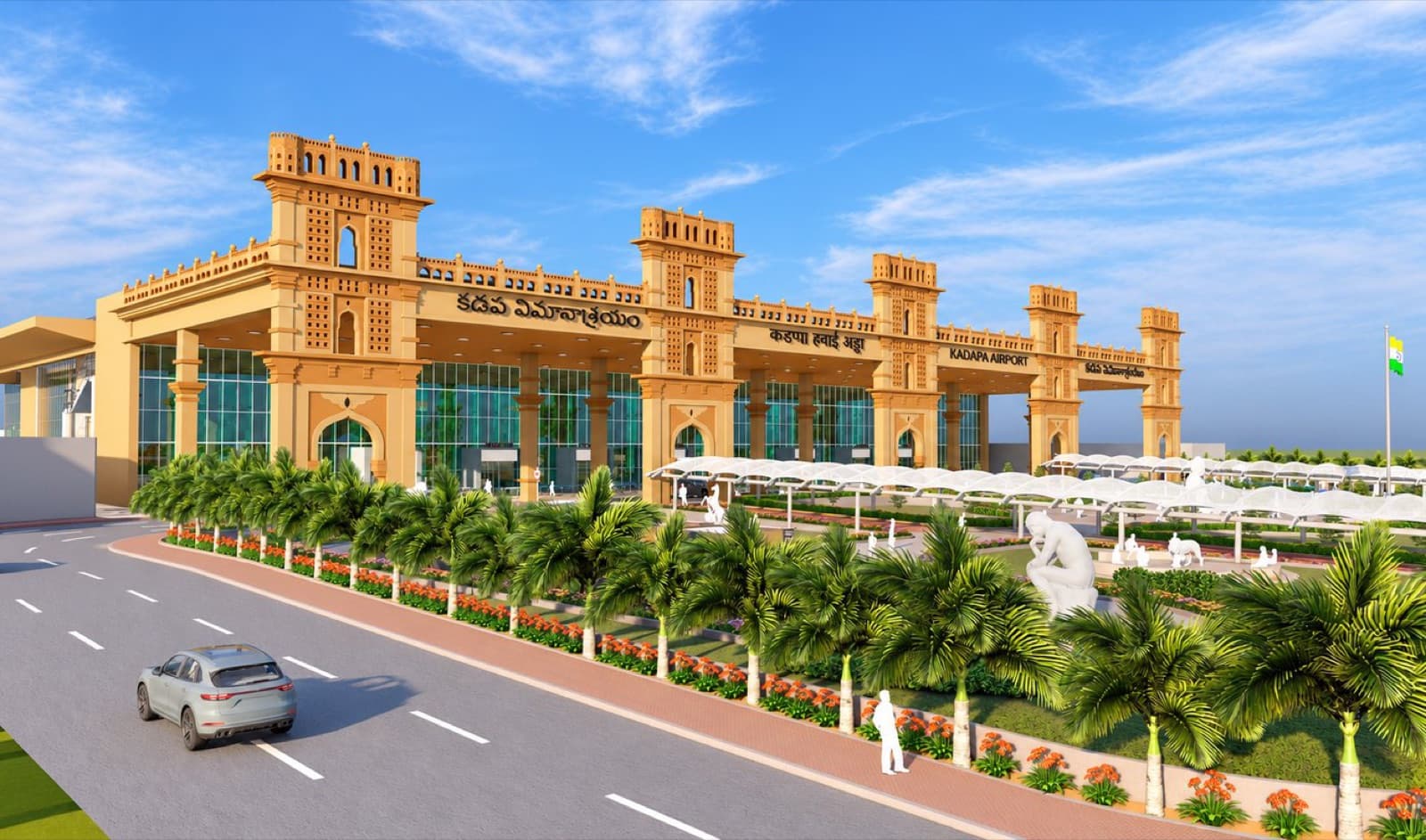
Flat and rounded banding of the kind running through the Kadapa Airport facade, cast as repeat lengths with corners as separate modelled elements.
Brackets & corbels
Repeated ornamental supports where CNC machining earns its keep — the carved detail is cut into the mold once and arrives identical in every casting.
Corner, mitre & stop-end pieces
Junction pieces modelled and cast as their own elements, so runs close cleanly without site fabrication.
CNC-machined mold sets
Each profile family carries its own engineered mold set — 220 element families currently run this way across our live projects.
Tested, logged material
No-polymer spray-up GFRC with AR-glass fibre from Nippon Electric Glass and Owens Corning, flexural-tested to ASTM C947 against internal acceptance targets.
Itemised supply
Elements dispatch in tracked lots with installer drawings and logged challans, so site teams fix by piece number, not guesswork.
From your drawings to installed elements
Cornice work begins with your issued DWG or GFC set. We rebuild each running profile as an exact 3D model — projection, drip, returns, mitred corners, stop ends — and resolve every junction before mold work starts. Ornamental and tight sections get CNC-machined molds; each element family's mold is machined once for the whole run.
Casting is no-polymer spray-up with AR-glass fibre. Every session is logged in the digital production system against its mix batch and QC checks, and coupons from production go to the in-house lab for flexural testing to ASTM C947. Finished lengths dispatch in itemised, tracked lots with installer drawings — piece numbers matched to your setting-out.
Built at MIRU
The factory, measured.
from our production system, July 2026Questions
How do I specify a GRC cornice for tender or GFC drawings?
Issue your section profile, projection and setting-out as DWG or GFC drawings, with the material clause referencing ASTM C947 flexural performance. We rebuild the profile as an exact 3D model and return it for approval before any mold is made, so the cast section is checked against your drawing, not interpreted from it. Finish, colour and fixing detail are agreed at the same stage.
How do cornices and mouldings fix back to the structure?
Fixing positions are resolved at the 3D-model stage, so cast-in sockets and fixing zones land where your structural detail needs them — typically mechanical fixings back to the slab edge or wall, to your facade engineer's design. Every dispatch lot arrives with installer drawings showing piece numbers and fixing positions, so the site team sets out from the same model the mold was machined from.
Why GRC rather than cut stone or precast concrete for a cornice?
A cornice is a projecting profile, so dead load at the slab edge drives the fixing design. GRC casts thin relative to precast, which keeps projecting sections light enough for simpler fixings. Against cut stone, a machined mold repeats the profile exactly — no variation between hands — and repeat lengths come off one mold instead of being carved piece by piece.
What finishes can a cast profile carry?
The finish comes off the mold face, so a machined mold gives crisp arrises and a consistent surface along the run. Smooth off-mold faces, light textures and pigmented mixes are all standard; colour is in the mix, not applied afterwards. For heritage profiles — as at Rajasthan Bhawan — the ornament itself is cut into the mold, so detail depth is identical in every piece.
How does supply work across a long cornice run?
Every casting session, mix batch and QC check is logged in our digital production system, and finished elements dispatch in itemised, tracked lots with challans. Each piece carries a number matched to the installer drawings, so runs arrive in fixing order rather than as loose stock. Across live projects the factory currently casts 1,100+ sq ft per production day.
What should I check in a cornice manufacturer in India?
Ask how the profile is produced — hand-shaped patterns drift; a CNC-machined mold does not. Ask for flexural test records against a named standard; ours run to ASTM C947 with acceptance at MOR 12 N/mm² and LOP 6 N/mm². And ask how a piece is traced from casting to site — if there is no log, there is no answer.
Have a facade on the drawing board?
Send the drawings. We reply with an element breakdown, a mold plan and a production timeline.
Start a project